Osaka's Special Zone Minpaku in 2026: What Overseas Investors Need to Know Now
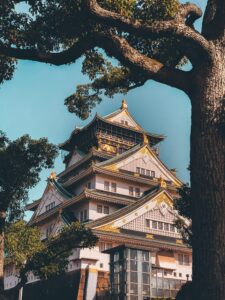
For nearly a decade, Osaka special zone minpaku — officially the National Strategic Special Zone accommodation program, or tokku minpaku (特区民泊) — has been the engine behind Japan's most active short-term rental market. Osaka accounts for the overwhelming majority of all tokku minpaku facilities nationwide, and for many overseas investors it has been the most approachable entry point into Japan's vacation rental sector.
That picture changed in 2026. Osaka City has formally ended new applications for the program, and any overseas investor researching an Osaka minpaku purchase today needs to understand what closed, what didn't, and what it means for a portfolio strategy going forward. This guide walks through the change, the reasoning behind it, and the paths that remain open.
What Is Osaka's Special Zone Minpaku, Exactly?
Tokku minpaku is a category of short-term accommodation business created under Japan's National Strategic Special Zone framework, first introduced in Osaka in 2016 to support inbound tourism growth. Unlike a standard "minpaku" registered under the 2018 Minpaku Shinpou (Private Lodging Business Act), which caps operating days at 180 per year, a tokku minpaku facility has traditionally been allowed to operate every day of the year — one of the reasons it became so attractive to investors comparing yield potential across licensing types.
The trade-off has always been a minimum-stay rule: guests must generally book a stay of two nights and three days or longer, a requirement Osaka City reaffirms is still strictly enforced for existing operators. The program also requires facility registration with the city, guest-record management, and a designated contact point for neighbors and authorities — obligations that, as we'll see below, sit at the center of why the program is now closing to new entrants.
The Big Change: Osaka City Has Stopped Accepting New Applications
In November 2025, Osaka City submitted a proposal to the National Strategic Special Zone Conference to end new tokku minpaku applications, citing a sharp rise in neighbor complaints — garbage disposal problems and noise chief among them. The proposal was approved at the national level later that month, and the city set a firm cutoff: new applications, along with applications to expand existing facilities (adding rooms or floor area), stopped being accepted as of May 29, 2026.
Reported complaint figures help explain the city's reasoning: neighbor complaints linked to minpaku operations are reported to have risen roughly fourfold between 2021 and 2024, and Osaka City had already begun conducting on-site operational inspections of existing facilities in late 2025 to check compliance with garbage handling, complaint-response protocols, and posted emergency contact information. It's a reminder that even a well-run property depends on active, professional management — sloppy day-to-day operations are precisely what triggered a policy this broad.
Importantly, this decision is specific to Osaka City. Osaka Prefecture's broader special zone designation, and neighboring municipalities that administer their own tokku minpaku ordinances, are separate administrative processes, and their acceptance status can differ from the city's and change on their own timeline. Anyone evaluating a property just outside the city line should treat this as an open question to confirm at the time of purchase, not an assumption either way — rules in this space have shown they can move quickly.
What Happens to Properties That Are Already Licensed?
If a facility received its tokku minpaku approval before the May 29, 2026 cutoff, Osaka City has stated it can continue operating under its existing terms. This grandfathering is the detail that reshapes the investment conversation for 2026 and beyond: a currently-operating, properly licensed tokku minpaku property is no longer something a buyer can simply replicate by applying fresh. It's now a defined, closed set of businesses.
What This Means If You're Considering an Osaka Investment Today
Option 1: Buy an Already-Licensed, Operating Property
With the application window closed, acquiring an existing tokku minpaku business — sometimes structured as a business transfer or jigyo shoukei (事業承継) rather than a simple property sale — is now the primary way to step into a fully-licensed, 365-day-capable Osaka short-term rental. This shifts due diligence priorities: beyond the usual questions about a property's condition and location, buyers need to verify the license transfers cleanly with the operation, that the facility's compliance record is clean (given the city's active inspections), and that guest-review history and booking performance reflect what the listing claims. This is exactly the kind of transaction where working with a local operator who already manages licensed Osaka properties — and who can coordinate with a licensed 行政書士 (gyoseishoshi) on the transfer paperwork — meaningfully reduces risk.
Option 2: Pursue a Different License for a New Property
For a property that doesn't already carry a tokku minpaku license, two other paths remain open in Osaka City:
- Minpaku Shinpou registration (the nationwide private lodging law), which caps operation at 180 days per year but generally involves a faster, lower-cost registration process — a reasonable fit for owners planning a hybrid vacation-home/rental use case rather than full-time commercial operation.
- Ryokan-gyo (inn business) licensing, which permits year-round operation similar to the old tokku minpaku model but comes with a longer approval timeline and stricter facility standards — fire safety equipment and inspection sign-off in particular tend to be the largest cost and time factors.
Which of these makes sense depends on the specific property, the owner's intended use, and current local requirements, and this is exactly the kind of decision that should be confirmed directly with BESSO TO GO or a licensed professional rather than assumed from general guidance — licensing categories and their requirements are administered locally and continue to evolve.
Option 3: Consider Other Regions
Osaka's closure to new tokku minpaku entrants is also prompting some investors to look at Japan's other minpaku markets — both other special zone areas and cities where the standard Minpaku Shinpou or ryokan-gyo route is a more natural fit from the outset. It's worth evaluating a target region on its own tourism fundamentals rather than defaulting to Osaka out of habit, since the calculus that made Osaka the easy first choice for years has genuinely shifted.
Is Osaka Still Worth Investing In?
Yes — with a more deliberate approach than before. Osaka remains one of Japan's top inbound tourism destinations, anchored by its food culture, Kansai International Airport access, and proximity to Kyoto and Nara, and none of the underlying demand drivers changed in May 2026. What changed is supply: the pool of tokku minpaku-licensed properties is now fixed, which plausibly makes existing, well-run licenses more valuable over time simply because no new ones are being created. At the same time, the market had already grown crowded in recent years as owners rushed to secure approvals ahead of anticipated restrictions, so competition among existing operators for guest bookings is real and rewards properties that are well-located, well-presented, and professionally managed — not merely properties that happen to hold a license.
For an investor weighing an Osaka acquisition today, the practical questions are less about "can I get a license" and more about "is this specific, already-licensed property a good business" — its compliance history, its location relative to transit and attractions, its review record, and the quality of the management behind it.
How BESSO TO GO Helps Overseas Owners Navigate This
BESSO TO GO has managed licensed special zone minpaku properties in Osaka since the earliest stages of building our portfolio, and we've watched this regulatory environment tighten in real time. For overseas investors, that on-the-ground experience translates into practical support: sourcing and evaluating already-licensed properties available for business transfer, coordinating with our licensed 行政書士 partners on the paperwork for a transfer or an alternative license application, and — once a property is in your hands — handling the English-language guest communication, compliance recordkeeping, and neighbor/authority liaison that Osaka City is now scrutinizing more closely than ever.
If you're a non-resident owner, we also handle the practical side that's easy to overlook from overseas: acting as your point of contact for utility and municipal matters, coordinating fixed asset tax payments, and structuring the licensing and compliance responsibilities so nothing falls through the cracks between application, transfer, and day-to-day operation.
Quick Answers
Can I still get a new special zone minpaku license in Osaka City?
No. Osaka City stopped accepting new applications, and applications to expand existing facilities, as of May 29, 2026. Facilities approved before that date can keep operating under their existing terms.
I already own a licensed Osaka tokku minpaku property — does anything change for me?
Your license itself isn't affected, but Osaka City has stepped up on-site compliance inspections, so it's worth confirming your garbage handling, guest-record keeping, and posted emergency contact information are all current. This is a good moment to have a professional manager review your operation rather than wait for an inspection to flag something.
Is buying an Osaka minpaku business still a reasonable investment in 2026?
It can be, but the analysis has changed. Rather than asking whether you can obtain a license, the question is whether a specific, already-licensed property is a sound business — its compliance history, location, guest reviews, and management quality. As with any Japan property decision, run your own numbers and confirm licensing and tax specifics with BESSO TO GO or a licensed professional before committing; no two properties or ownership structures are identical.
What if the property I'm interested in doesn't have a license yet?
It may still be viable under Minpaku Shinpou (180-day cap) or a ryokan-gyo license, depending on the property and your intended use. Both routes remain open in Osaka City for properties that were never part of the tokku minpaku program.
A Market That Rewards Careful Buyers
Osaka's tokku minpaku story in 2026 isn't one of the market closing — it's one of the market maturing. The easy-entry phase, where any qualifying property could apply and expect approval, is over. What's left is a smaller, more defined set of licensed properties, a stricter compliance environment for the operators who hold them, and a handful of alternative licensing paths for new entrants willing to work through them properly. For investors who move carefully, verify a property's actual license status and compliance record, and partner with people who manage these properties day to day, Osaka remains a legitimate part of a Japan vacation-rental strategy — just a different one than it was two years ago.
Thinking about an Osaka minpaku acquisition, or unsure whether your target property's license will actually transfer cleanly? Contact BESSO TO GO for a straightforward read on a specific property or licensing question — we'll tell you plainly what we know, what needs confirming with a licensed professional, and whether it fits what you're trying to build.
\ 最新情報をチェック /